PROJECT HANDLING METHODS

Complex cargo gets easier
when the right questions come first.

For precision, frozen, out-of-gauge and energy-storage cargo, we align product records, import roles, handling needs and final delivery into one action list.

CARGO-SPECIFIC METHODS

Different cargo. Different first checks.

Start with the gaps in a customer’s first inquiry, then see what we would check, how we would respond and who would act next.

01PRECISION EQUIPMENT

Precision equipment: match the model first.

When an instrument manufacturer asks for delivery to a US warehouse but sends only an invoice for “testing equipment” and crate dimensions, the missing importer arrangement is still part of the review.

REVIEW

We would match the nameplate, manual, main unit and accessories to the invoice and packing list. Any model or quantity mismatch goes back to the factory for clarification; the buyer confirms the importer and document contact.

PLAN

If packing is not final, we would ask the factory to confirm orientation, shock protection, usable lift points and unpacking. The warehouse then confirms its appointment, unloading equipment and access limits—not simply its address.

BEFORE EXECUTIONModel-to-record map + Packing instructions + Warehouse conditions
See the checks and next handoffs
Fields to check
Main-unit model, accessories and quantities, use, the basis for the declared value and packing photos, with the source document for each item.
What triggers a recheck
The invoice does not match the nameplate, the importer is unclear, or the warehouse has not confirmed unloading. These remain open conditions.
Next handoff
The factory resolves product and packing gaps; the buyer confirms import contacts; the warehouse confirms booking and unloading before the written plan is finalized.

Precision-instrument documentation, matching accessories and protective foam packing reviewed together
PRECISION EQUIPMENT
02FROZEN FOOD

Frozen food: connect records and temperature.

When a food exporter wants delivery to a European cold store but provides only a “keep frozen” instruction, incomplete composition, batch records and receiving windows need separate attention.

REVIEW

We would collect the product details, ingredients or formulation, production and batch records, shelf life, labels and agreed temperature range. Items needing the importer’s review stay on a separate list; a reefer booking alone is not import readiness.

PLAN

If factory temperature records and the receiving schedule do not line up, we would assign the record handoff, exception contact and acceptance check. A changed temperature range or appointment means rechecking cold-store conditions before adjusting delivery.

BEFORE EXECUTIONProduct-record list + Temperature handoff + Exception contacts
See the checks and next handoffs
Fields to check
Product-to-label match, batch and shelf life, agreed temperature range, record method and the cold store’s receiving window.
What triggers a recheck
The label and ingredients differ, import records remain open, temperature records are missing, or the receiving slot changes.
Next handoff
The factory supplies product and dispatch records; the importer confirms destination paperwork; transport and receiving teams align temperature records and exception contacts.
Frozen food product and temperature records reviewed in a cold store
FROZEN FOOD
03OUT-OF-GAUGE CARGO

OOG cargo: start with the unloading site.

When an equipment factory asks for oversized delivery to Brazil and the receiver says only “we have a forklift,” dimensions and total weight do not establish a workable handling plan.

REVIEW

We would request a dimensioned drawing, unit weight, centre of gravity, usable lift points and packed dimensions. Missing lifting or lashing information goes back to the relevant technical party for confirmation.

PLAN

If equipment capacity, vehicle access or working space is unclear, we would ask the receiver for site limits, lifting equipment, the unloading position and responsibility. Only then can loading, securing, transport and site handover be connected.

BEFORE EXECUTIONLoading conditions + Lifting and securing checks + Site handoff
See the checks and next handoffs
Fields to check
Packed dimensions, unit weight, centre of gravity, lift and lashing points, vehicle access and available handling equipment.
What triggers a recheck
Drawings and packed dimensions differ, lift points are unconfirmed, or the receiving site cannot yet confirm suitable access or equipment.
Next handoff
The factory supplies technical and packing facts; handling parties confirm loading and securing; the receiver confirms access, unloading people and equipment.
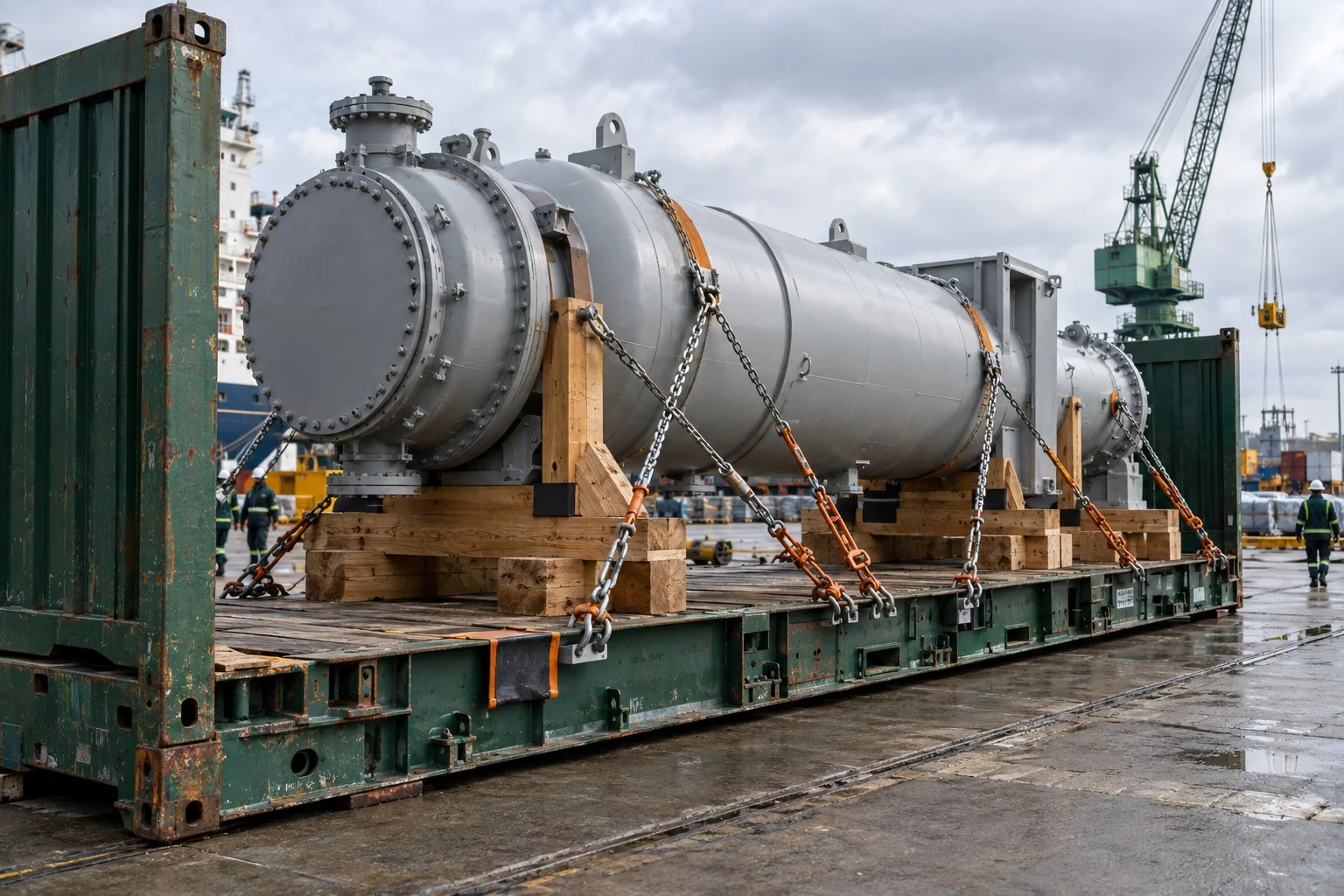
Out-of-gauge equipment secured on a flat rack before port lifting
OUT-OF-GAUGE CARGO
04ENERGY STORAGE

Energy storage: confirm the shipped configuration.

When an energy-storage supplier asks for delivery to a Canadian site and sends a cabinet model covered by both battery and battery-free configurations, appearance is not enough to choose the route.

REVIEW

We would ask the factory to confirm whether this shipment includes batteries, its actual models and ratings, quantities and packing. Available safety and transport records must relate to that configuration; series-level records may leave open checks.

PLAN

If transport acceptance is still open, we would check with the teams handling the shipment rather than treating received documents as accepted cargo. Unloading, temporary storage and access are reviewed alongside it; configuration changes trigger another check.

BEFORE EXECUTIONShipment configuration + Matching documents + Site conditions
See the checks and next handoffs
Fields to check
Battery inclusion, actual models and ratings, quantities, packing, document coverage, unloading and storage conditions.
What triggers a recheck
The shipped configuration differs from the records, transport acceptance is unconfirmed, or packing and storage conditions change.
Next handoff
The factory confirms configuration and records; the teams handling the shipment review acceptance; the receiver confirms equipment, access and storage arrangements.
Energy storage equipment configuration and transport records reviewed before shipment
ENERGY STORAGE
A PRACTICAL BOUNDARY

Confirm the facts, roles and document checkpoints before discussing price and timing. Service scope and destination handling remain subject to shipment review and written agreement.

START WITH CLARITY

Start with the cargo, then build the route.

Tell us what is shipping, where it is going and where the delivery responsibility should end.

Discuss Your Shipment