
OOG shipping,
from loading plan to destination lifting.
For oversized, heavy or irregular equipment, the answer is not only a container type. Dimensions, centre of gravity, securing, port operations and site conditions all need to connect.
Data needs to describe the loading method,
not just say “oversize” or “heavy”.
Packed dimensions, single-piece weight, centre of gravity, lift points, supports and securing positions determine whether equipment can move through the right container, port operation and destination unloading path.
- Confirm packed L × W × H, piece weight and total weight
- Mark centre of gravity, lift points, support points and load limits
- Review drawings, loading plan and outer protection
- Collect origin and destination access, road and lifting conditions
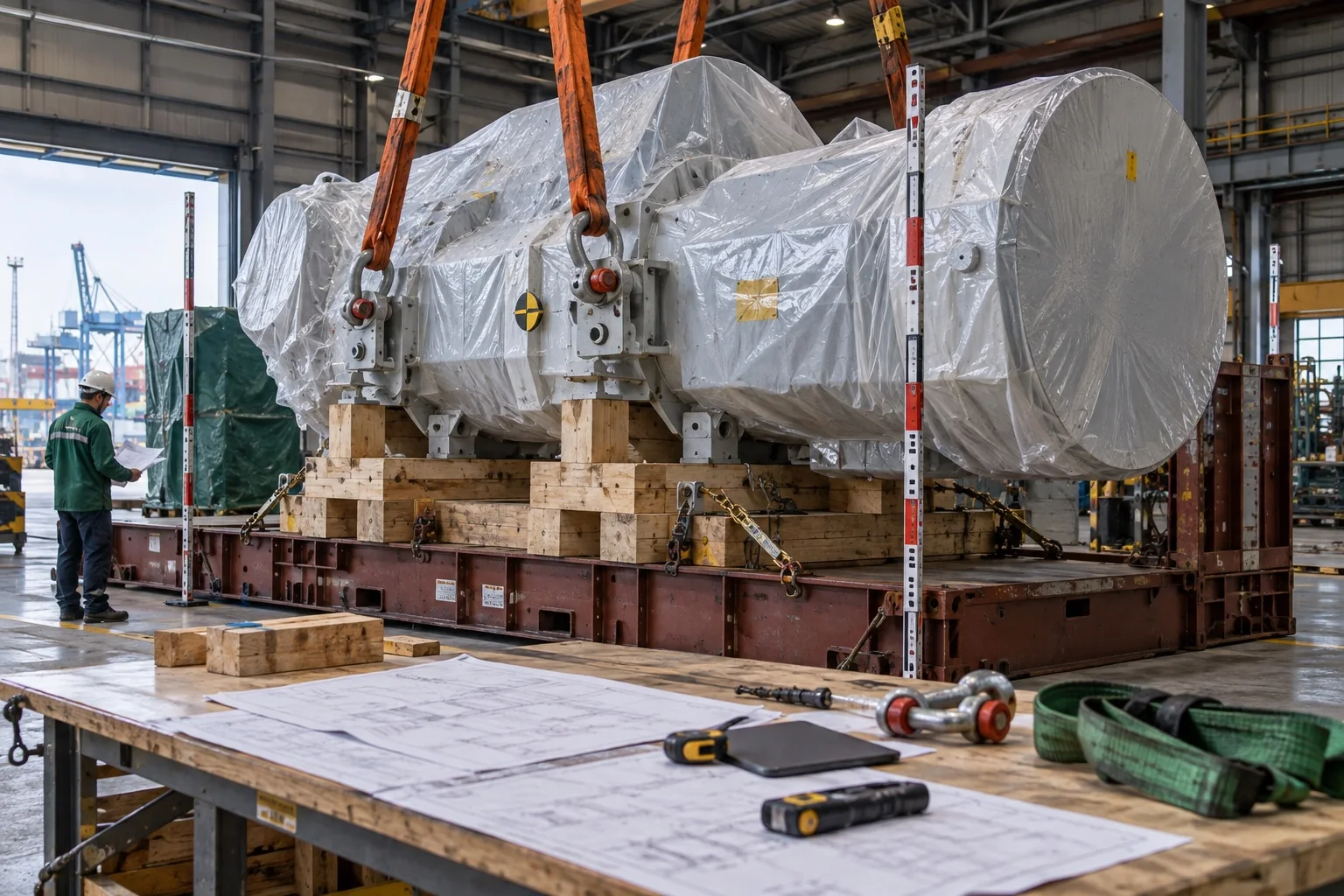
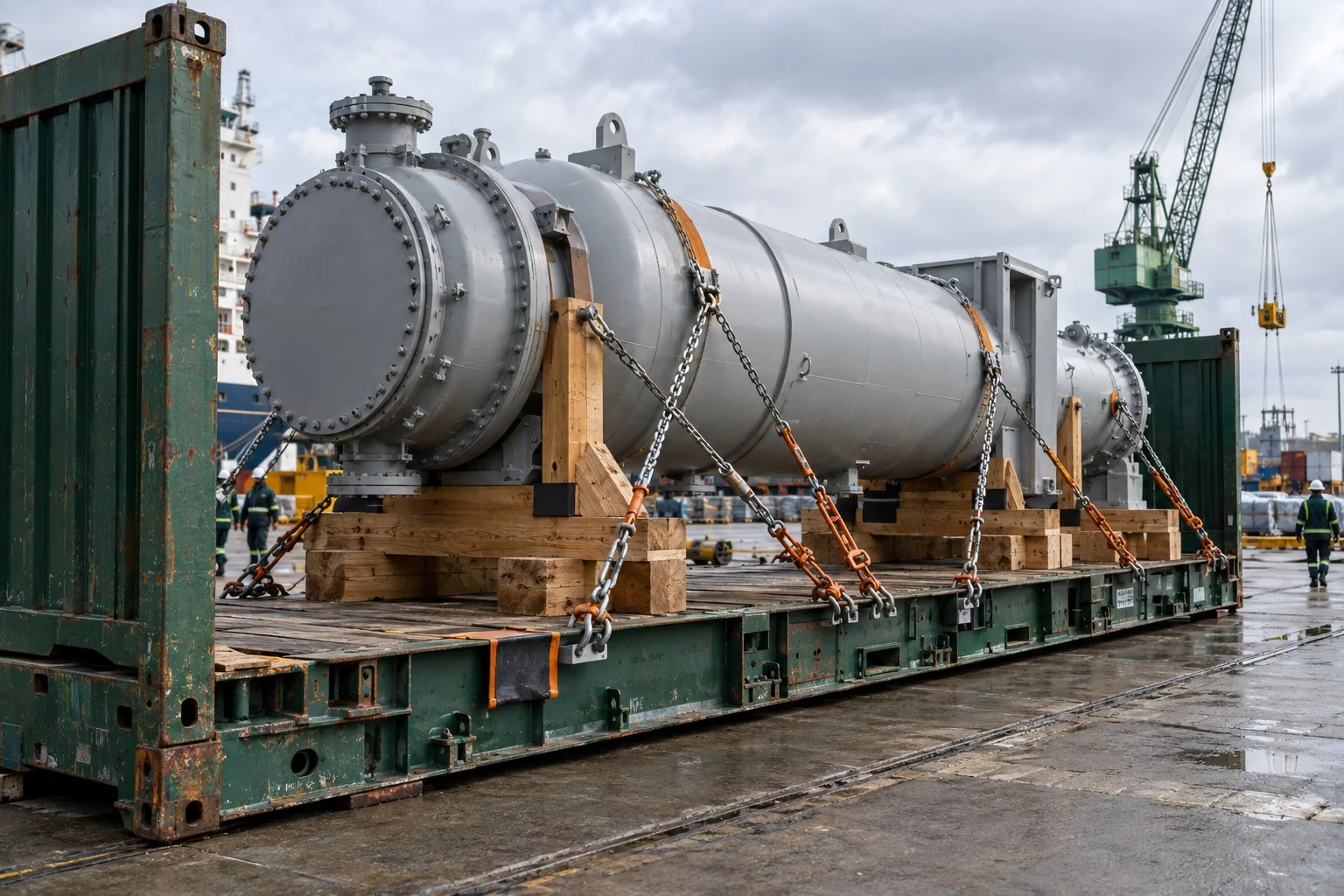
The container is only the start.
Loading and lashing make execution possible.
Flat rack, open top or other load arrangements should be reviewed together with the equipment’s load limits, fixing points, protection and port operating conditions.
Review port and destination path
before the equipment enters the terminal.
We put port handling, the transport route, destination import conditions and the final site on one execution map, avoiding a late mismatch of equipment, resources or access.
- 01Export readinessData review · Loading plan
- 02Port operationGate-in · Lifting · Lashing
- 03International freightSpecial container · Milestones
- 04Destination handoverCustoms · Route · Unloading
- 05Handover completePlacement · Acceptance · Close-out
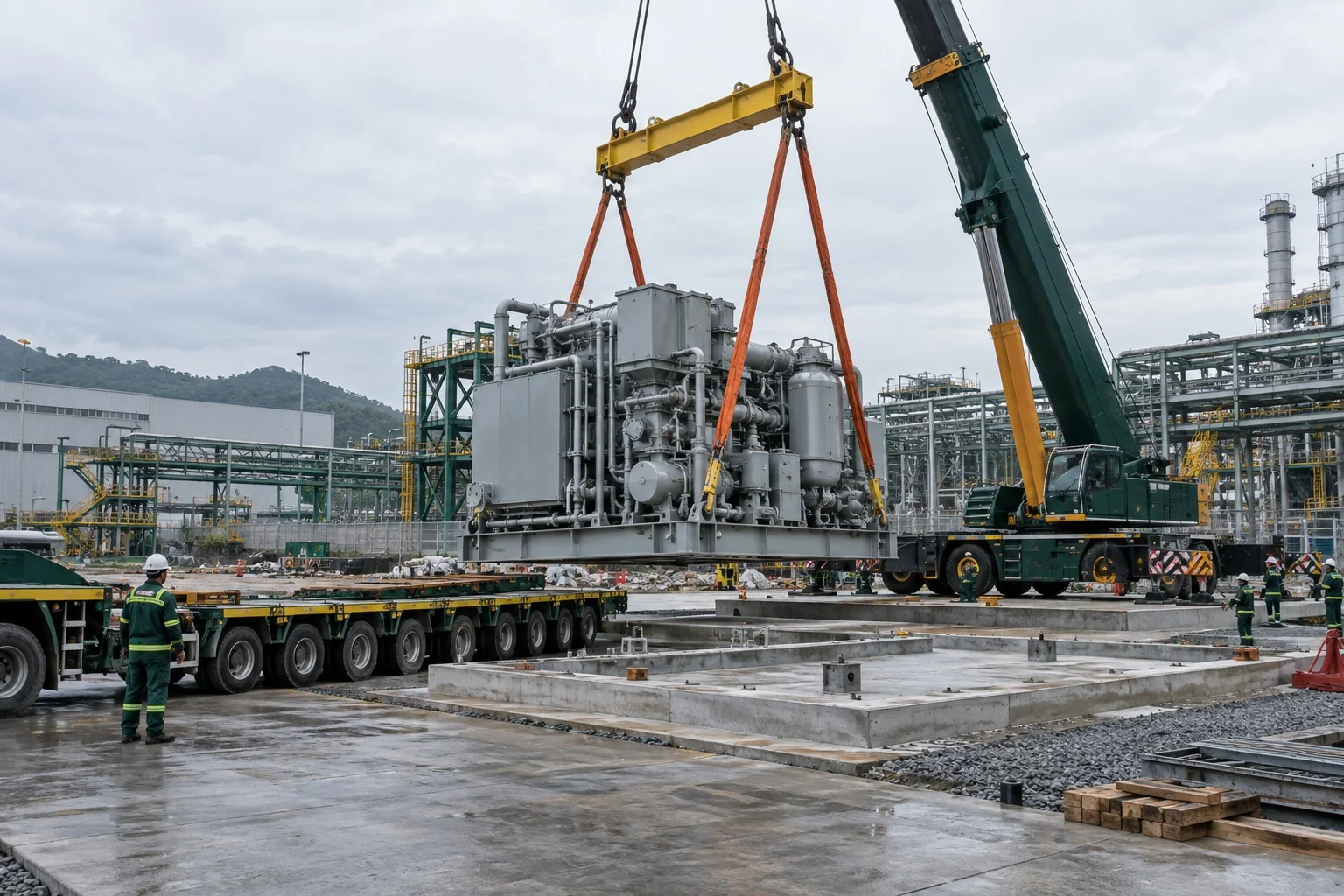
The unloading site belongs in the plan.
That is a complete OOG delivery.
Destination roads, work area, crane, operating window and receiving interface should be confirmed together with the equipment loading plan.
Clear responsibilities
make execution easier.
Scope changes with equipment data, port and road conditions, destination rules and site resources. We set out coordination items, customer inputs and cost boundaries before execution.
- Dimensions, centre-of-gravity and loading-record review coordination
- Container, lifting and lashing-plan coordination
- Export filing and destination customs handover
- International transport and operation milestone communication
- Destination unloading handover support
- Accurate equipment data and loading drawings
- Confirmed origin and destination site resources
- Importer and receiving interface details
- Prompt notice of equipment, route or address changes
- Support during required lifting and issue review
Review the loading data.
Then plan the handover.
Send packed dimensions, weight, centre of gravity, lift points and site conditions. We’ll review loading, port operations, the destination route and unloading, then outline the gaps and next checks.